Symbolic Rituals

Get your Family & Friends Involved!

Wedding Ceremonies are More Stripped Back & Personal Than Ever.

For many, religion tends to take a back seat in modern wedding ceremonies. Non-religious customs and traditions have taken pride of place at many modern weddings in recent years and couples are opting to combining time honoured traditions with modern love stories and the result can be pretty special.

Yes, your day is primarily about you and your other half, but you wouldn’t be who you are today if it wasn’t for your wider community of family and friends… and for that, they could actively participate in your celebration, and they can do this in a number of ways:

Symbolic Rituals

It’s a common phrase that “actions speak louder than words”, and creating a visual representation of your marriage through symbolism is an incredibly powerful way to contribute to your awesome ceremony. There are so many ways to incorporate a symbolic element, but here are a few brief examples:

Ring Blessing

Of course your wedding ceremony readings ,vows and the songs you choose to play at your ceremony will make it super meaningful, but if you really want to take it to that next level, think about incorporating a ring warming ceremony. It’s an easy way to involve all of your loved ones in your big day and make your brand new rings even sweeter and more sentimental.

Each guest will be asked to hold your rings for a moment and make a silent wish for you, your marriage and the years that are to follow this special day. This is usually done whilst I am telling your journey, your love story to all your family and friends…

After the rings have been passed to each member of the congregation they will be returned the best man/woman for use when saying the vows.
The whole idea of a “Ring Warming Ceremony” is that your wedding rings have been “warmed” forever by the well wishes, positive vibes and loving energies of each guest. This is an extremely personal way to get your guests involved in not only your wedding reception but in the ceremony itself.

I always recommend that the rings are joined to one another with a ribbon or in a vessel… I’ve seen rings tied together in a bird’s nest, in a special box, in a lace bag cinched at the top, in a tiny bird cage…you get the idea. It’s important for them to be tied together at the very least. One fear couples have is that the rings will get lost during the ring warming. If they’re secured in a container they have less of a chance of falling out.

For a large wedding of 100 guests or more passing your rings around may take up a lot of time!
So instead of the steps outlined above, you can simply tie your wedding rings to a piece of ribbon and leave them hang from a table in your reception area before the wedding ceremony. Place a sign on the table instructing guests to hold the rings in their hands for a moment and make a wish for you both. Kindly ask your best man to guard the rings and pop them back in his pocket when it’s time to start the ceremony!

Hand Tying

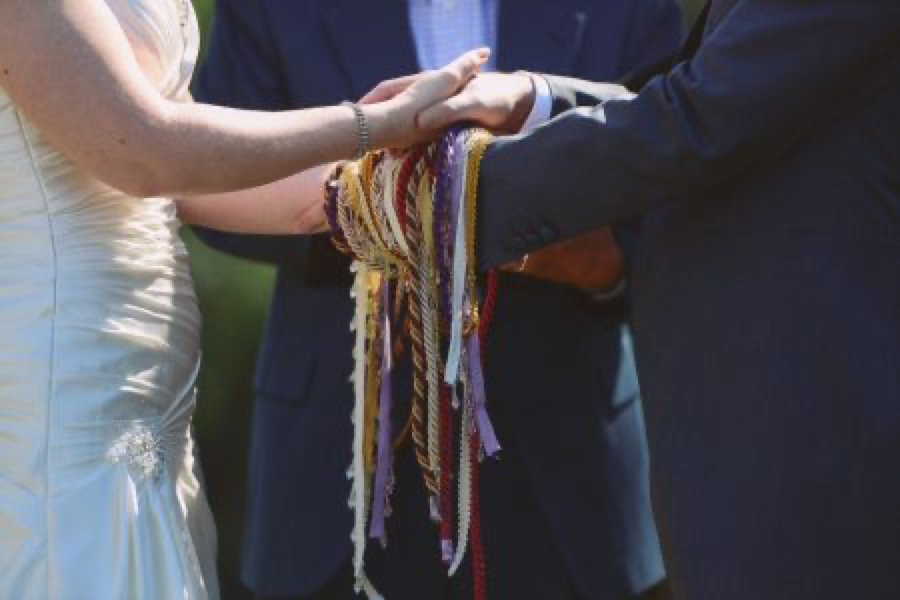
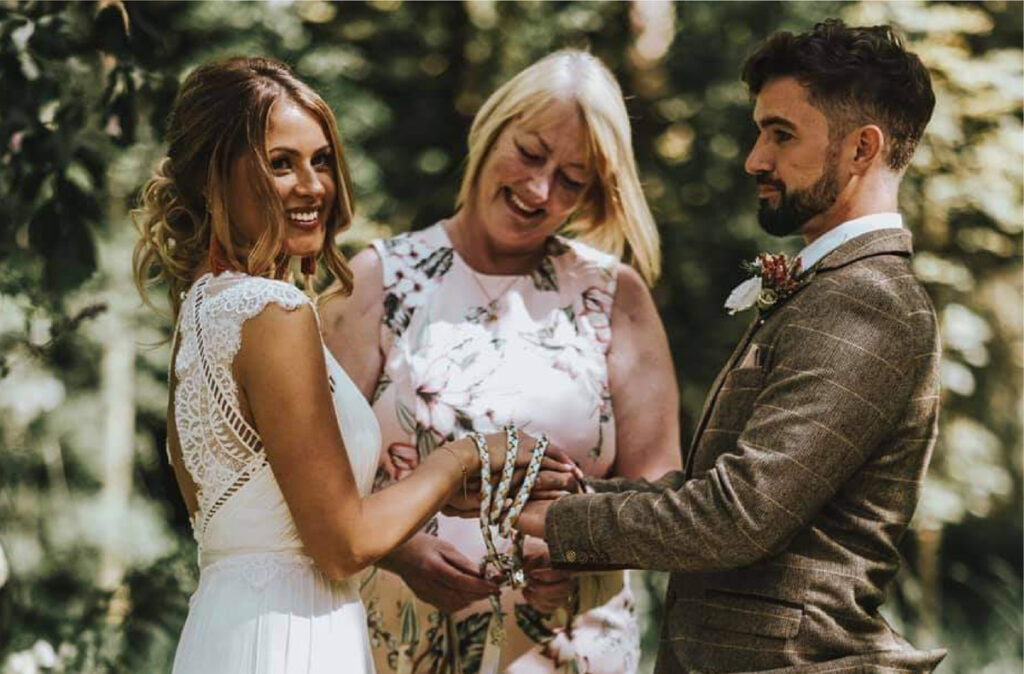
The most famous colloquial wedding terms “Tying the Knot” and “Giving ones hand in marriage” comes from the age-old Celtic tradition of hand-fasting or hand tying.

Hand-tying has become increasingly popular in recent years as couples look for ways to add symbolism and personalisation to your ceremony.
It involves tying a couple’s hands together, binding them as one in love and in their new life. Hand tying is a meaningful and incredibly versatile ritual.

It can be done in all kinds of ways, to suit every couple in different venues.
You can choose your ribbons to express your personality and everything that’s important to you – or quite simply, to fit the theme and colour scheme of the day.

Maybe the most famous hand-fasting! (pictured on the right)

Alternative Hand Tying to Involve Children

This hand tying ceremony is a lovely way to include children or other members of the family.

  • Each family member has 2 ribbons of their specific colour
  • Each parent gathers the ribbons from the family
  • One parent will knot the ribbons together at one end and hold them
  • The other parent will plait or braid the ribbons together and then complete with a knot

This shows that they are stronger together and that each combination of colours is just as important.

Sand Ceremony

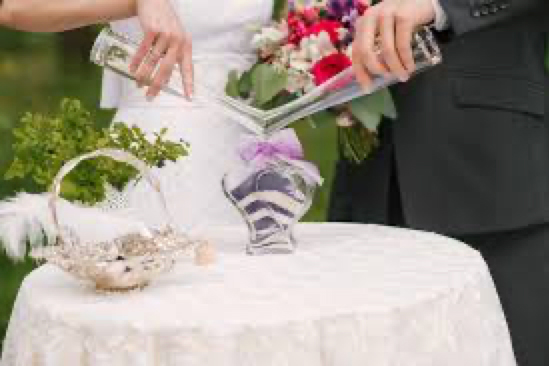
A type of unity ceremony, the sand ceremony expresses the coming together of two people or two families into one new family…

A sand ceremony is a great way to involve the couple’s parents. Each set of parents has a vase with different coloured sand. The parents take turns to pour their sand into the central vase before the couple, creating a layered effect. This symbolises their support of the couple in marriage.

A children’s variation of the sand ceremony is perfect if the couple have children together already, or have children from a previous relationship. Each child has a small vase with coloured or white sand, and they pour this into the central vase just before the couple finish pouring in their sand. This provides a layer where the couple’s and children’s sands are mixed. The children can then pour the rest of their sand on top of the couple’s sand.

Wedding sand ceremonies are ideal for outdoor or informal weddings, and work especially well for beach weddings where some of the sand can come directly from the venue giving it even more significance. If you aren’t getting married at the beach, wedding sand ceremony kits can be ordered with just about any colour sand. The central vase can be sealed with wax once the ceremony is over, and makes a wonderful keepsake of your wedding day.

Unity Candle Ceremony

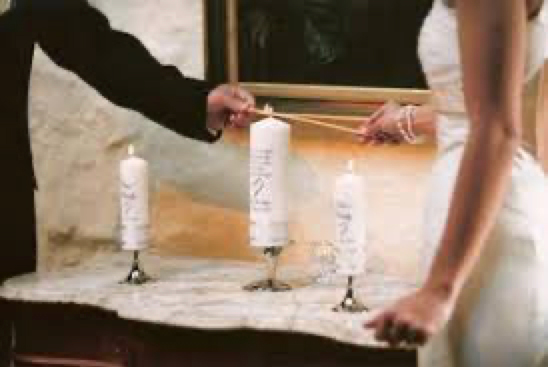
Make your wedding even more romantic by lighting your own eternal flame in front of your friends and family. A unity candle ceremony is a wedding tradition used to symbolize the joining of two parties with the lighting of a candle.

At some point in the wedding ceremony I will explain the unity candle ceremony meaning, then the couple will each light a taper candle and use them to light a larger pillar candle together. The flame that burns represents the unity of the two partners. The ceremony ends with each partner blowing out the other’s taper candle (kissing their unmarried life goodbye and bonding them forever). You can then relight the large candle as a constant reminder of your vows taken on your anniversary each year.

Wish you could involve more people than just you and your partner?

Some couples have their mothers light the taper candles after guests are seated to give them a larger role in the wedding ceremony. Others ask their children to join them as they set their unity candle aglow.

There aren’t any strict rules about this, so go ahead and include your nearest and dearest.

** Unity candle Ceremonies are not recommended for outside ceremonies **

Wine Box Ceremony

If you and your future spouse share a love of good vino, incorporating a wine box ceremony into your wedding can be a fun addition…

Many couples are a bit uncomfortable being in the limelight on their wedding day and don’t want over-the-top, grand gestures or anything said that’s too soppy. That’s when I tell them about the wine box ritual. I like to think of it as a time capsule with interest.

Let me explain..
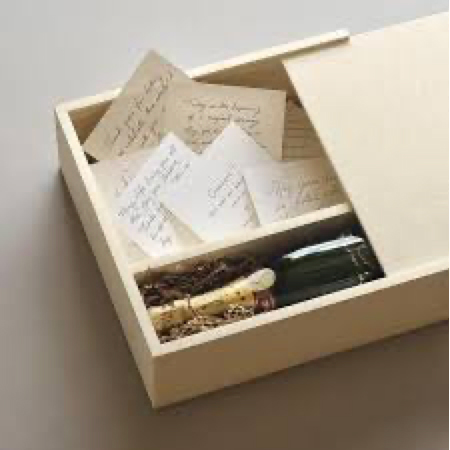
The idea is that you buy a bottle of wine or vintage champagne or even mead. The week before your wedding, you and your partner take 5 minutes to write on a card or in a letter what you love about each other and why you have chosen to get married.

Then, during your wedding ceremony, most commonly after the vows and exchange of rings, we perform the wine box ritual. The wine and love letters are placed in the wooden box, engraved with your names, and sealed either with a wax seal or with a chain and padlock.

The box can then be opened on your first anniversary, you can drink the wine whilst reading the love letters you wrote to each other a year before, then you can each write another letter about your first year of marriage, place the letters along with a replacement bottle of wine and shut the box for another year.

You have your very own wedding time capsule for years to come.

Oathing Stones Ceremony

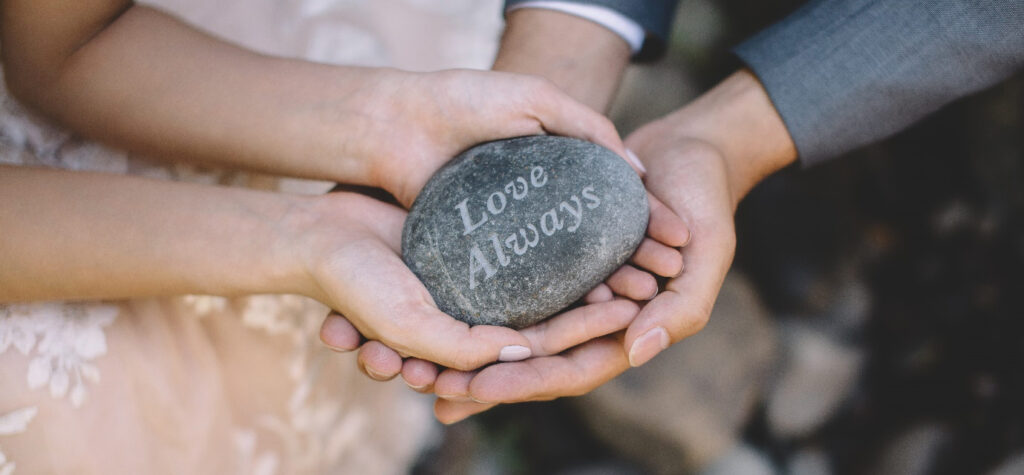
In ancient times people made their vows using oathing stones as they were seen as strong and stable. In this Celtic tradition, which began in Scotland, the couple each hold the oathing stone in their hands, or put their hands together on it.

The stone may be one from a favourite place or bought because it simply appeals to you. You could carve your names and the date on a large stone which you would hold when speaking your vows and then maybe keep it afterwards in your home or garden.

It is said that the use of oathing stones is where the phrase “Set in stone” comes from. Another variation of this popular ceremony is where your guests are involved. The stones are given to your guests on the way in to the ceremony area and they are invited to ‘warm’ them with their hands throughout the ceremony. The stones can be left in a basket or any receptacle at the entrance or placed on each individual chair. Guests silently make their wishes to you, charging the stones with their blessings and positive energy. The stones are gathered up at the end of the ceremony and given to you as a keepsake of your wedding day.

This is a very versatile and meaningful symbolic element which can be tweaked to suit any couple.

These are just a few ways to personalise your wedding, to whet your appetite and get the creative juices flowing so you can have your ideal ceremony!
There are so, so many ways you can personalise your wedding ceremony, having a qualified and experienced Celebrant really does offer you limitless options that can truly reflect your personality.

I am here with lots of ideas to make your ceremony completely personal to you as a couple…your ceremony will be meaningful, interesting and above all fun.

So no matter where you want to say your vows, let’s make the ceremony all about you.

Annie
x

Get in touch to arrange a meeting

Follow The Rivington Celebrant on Instagram

Menu